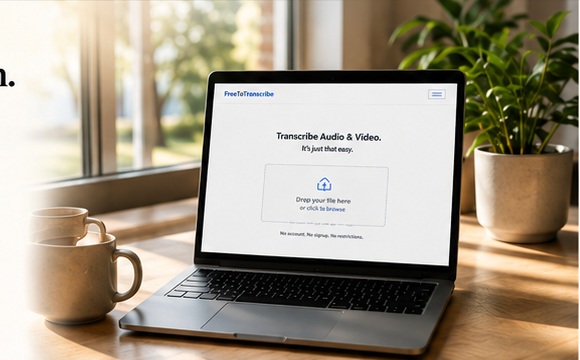
No Subscription.
No Signup.
No Account.
Just Transcribe.
Remember when the internet felt free?
You could open a website, use a tool, get your job done, and move on. No strings. No onboarding email sequence. No monthly bill quietly hiding in your bank statement.
Those were the days. Here's what happened to them — and what you can do about it.
Then everything became a subscription.
This didn't happen by accident. Around the early 2010s, the software industry discovered something investors love: recurring revenue is worth far more than one-off sales. A customer who pays $10 every month is valued much higher than one who pays $30 once — so companies were rewarded for converting every product, however small, into a plan.
That logic made sense for big, living products like music libraries and cloud storage. But it spread to everything: PDF converters, file compressors, invoice makers, AI assistants. Small leaks. Big commitment.
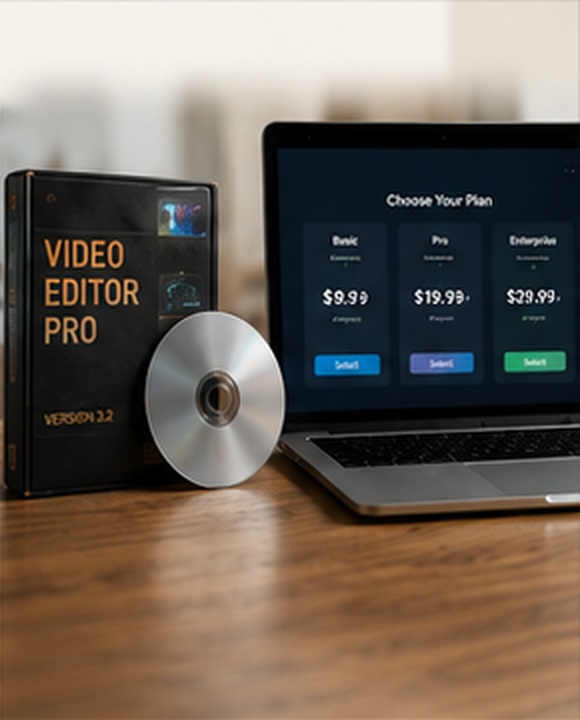
You go online to do a two-minute job, and before you know it, you are staring at a pricing table with three columns. You are not an enterprise. You are a person with one file.

Software
Converters
Converters
Audio & Video
Tools
More
The subscription trap is not always evil.
It’s just exhausting.The real cost isn't only the money — it's the admin. Surveys keep finding the same thing: most people underestimate what they spend on subscriptions every month, often by two to three times. The charges are small individually, so no single one triggers alarm. Together, they quietly add up to a car payment.
And the friction is often deliberate. Sign-up takes one click; cancelling takes a phone call, a "retention offer," and three confirmation screens. Designers have a name for this — dark patterns — and regulators in several countries are now forcing "click to cancel" rules because of it.
- Enter your email again.
- Upgrade to export.
- Enter your card info.
- "Cancel anytime" (in settings, behind a survey).
Now you don't have a tool. You have a future problem.
We’ve all become subscription detectives.
Every month, we open our bank app and start investigating charges we half-recognise. Every new tool now triggers the same defensive checklist:
- What's the free tier really for?
- What will I lose access to later?
- Why am I being asked for so much info?
- Who's storing my data — and for how long?
- Will they make it hard to leave?
That wariness is rational. It's also exhausting — and it's a tax on trying anything new.
The internet should not punish occasional users.
Subscriptions price for the heavy user and quietly overcharge everyone else. But most real life is occasional: a podcaster with one interview, a student with one lecture recording, a journalist with one source call, an HR manager with one job interview to document.
For that person, the job should be simple:
- Drop the file.
- Get your transcript.
- Done. That's it.
They don't want a dashboard. They want the job done.
How to audit your subscriptions in 20 minutes
- Do the bank-statement sweep. Open three months of statements and list every recurring charge — including the annual ones you only see once a year. Most people find at least one they'd forgotten.
- Run the per-use math. Divide each monthly fee by how many times you actually used the tool last month. A $15/month app you opened twice costs $7.50 per use. Would you pay that at the door?
- Apply the 30-day test. If you can't remember using it in the last 30 days, cancel it. If you genuinely miss it, re-subscribing takes two minutes — that's the one time sign-up friction works in your favour.
- Replace, don't just cancel. For each cancelled tool, note the one job you used it for, and find a pay-per-use or free alternative for that job. You keep the capability without the standing cost.
When pay-as-you-go wins — and when it doesn't
We'll be straight with you: subscriptions aren't always the wrong answer. The question is frequency.
| Your usage | Best model | Why |
|---|---|---|
| A few files a year | Pay-as-you-go | You pay only for the minutes you use. No standing cost, nothing to cancel. |
| A few files a month | Pay-as-you-go (usually) | Do the per-use math — occasional use almost never justifies a monthly plan. |
| Hours every week, team workflows | Subscription | Heavy daily use is exactly what subscriptions are priced for. Take the plan. |
If a tool can't tell you honestly when not to use it, it isn't pricing — it's a trap.
FreeToTranscribe
Built around one simple idea: you should not need a subscription to transcribe a file. So we made the numbers boring and visible instead:
It is completely free — no card, no account, no payment. Upload your file, get your transcript, download it and go. Transcripts download as TXT, SRT, VTT or RTF, and files are deleted after transcription. Up to 5 transcriptions per day, 60 minutes total daily limit.

No account means peace.
We do not need your life story, and we cannot lose data we never collected.

No signup means testing properly.
Try it with privacy intact. No credit card. No "trial ends in 7 days" countdown.

No subscription means no regret.
Use it when you need it. Forget about it when you do not. Nothing keeps billing.

No lock-in. No drama.
Your transcript is a file on your computer. You never need us again — until you do.
The old internet.
FreeToTranscribe is our small attempt to bring some of that feeling back. A tool that opens when you need it, works without making a fuss, and lets you leave without following you home. Need captions instead of a transcript? The same upload also produces subtitle files — see Create Subtitles.
Work should feel like progress — not like managing a portfolio of monthly fees.
AI-powered transcription you can trust.
MP3, MP4, WAV, M4A, MOV, WebM and more.
Files deleted after transcription.
No clutter. Just results.